- Agricultural Builds
How to plan a farm shed that actually works for how you farm
Planning a farm shed? A few key points to address early to create an efficient structure.
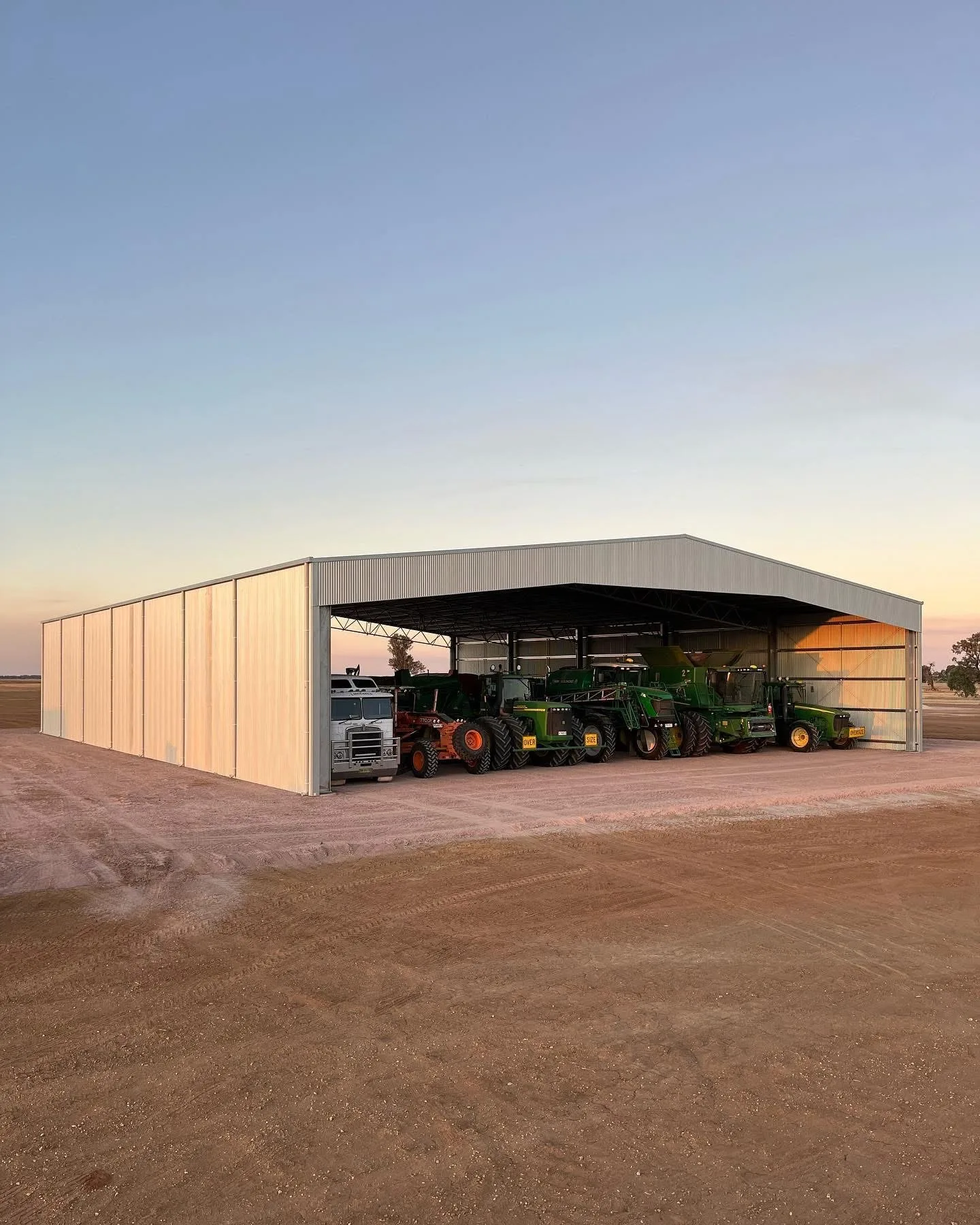
A farm shed is one of those buildings that can become an essential part of your operation, or a frustrating, expensive space that never quite works the way you intended.
The difference usually comes down to planning.
It’s easy to start with a simple question:
“How big should my farm shed be?”
But there are much more important questions to answer first.
What machinery needs to go inside? Where will it be accessed from? What will you store? Will you need a workshop? What about future machinery? How high do the doors need to be? Where will you load and unload? Do you need power, water or drainage?
A well designed farm shed should be built around how your farm operates today and how you expect it to operate in the future.
Here’s where to start.
Start with how you’ll actually use the shed
Before thinking about colours, cladding or even the exact dimensions, think about what the shed needs to do.
Will it primarily be used for:
- Machinery storage
- Tractor and implement storage
- Hay or grain storage
- A workshop
- General farm storage
- Vehicle storage
- Livestock-related activities
- Chemical or fertiliser storage
- A combination of several uses
The answer will influence almost every part of the design.
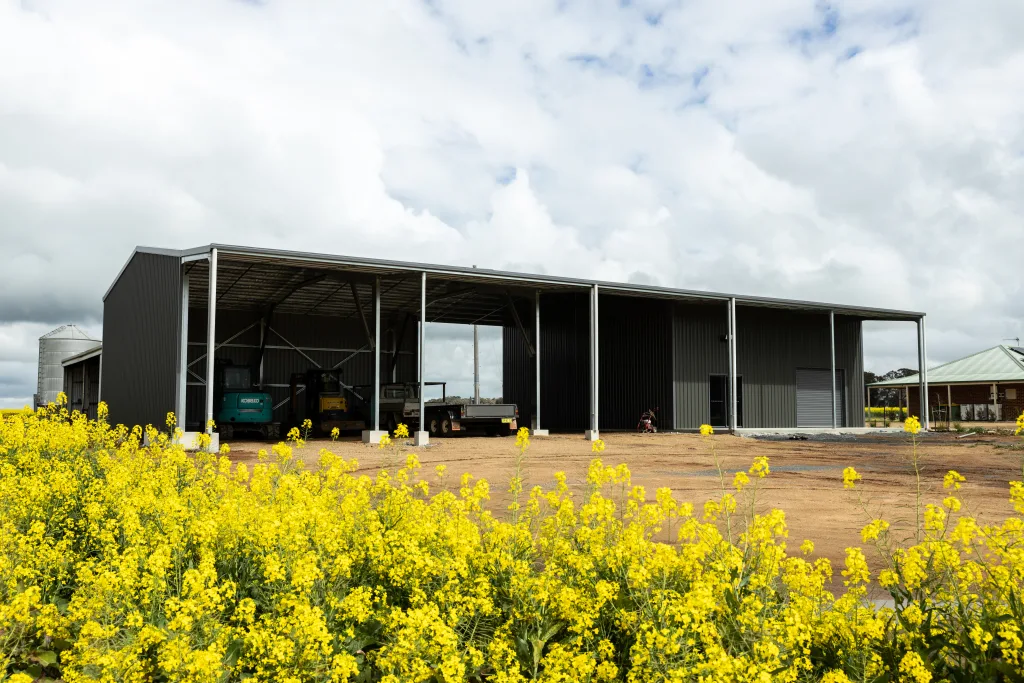
A machinery shed may need large openings and generous internal clearances. A workshop might need additional lighting, power and work areas. A storage shed may benefit from dedicated bays or enclosed areas.
Design the shed around the job, not the other way around.
Think about the machinery first
One of the most common mistakes when planning a farm shed is designing the building around the machinery you own today.
Farm machinery doesn’t tend to get smaller.
If you’re planning to upgrade a tractor, header, sprayer or implement in the next few years, consider its likely size now.
Measure the machinery you currently use and think about:
- Overall width
- Overall height
- Length
- Turning space
- Door clearance
- Working and maintenance space
- Room to attach and remove implements
Don’t just make the roller door wide enough to fit the machine.
Make it wide enough to comfortably use.
A few extra metres of building width or additional door height can make a huge difference to the functionality of a farm shed over its lifetime.
Plan your access carefully
A great farm shed can quickly become impractical if getting machinery in and out is difficult.
Think about where vehicles approach the shed, how they turn and which doors they’ll use.
Consider:
Where is the main entrance?
Will machinery need to drive straight through?
Would multiple roller doors make the shed more practical?
Do you need doors on more than one side?
Will trucks need access?
Is there enough room outside the shed to manoeuvre?
It’s also worth considering the ground around the building.
A well-positioned driveway, hardstand or apron can be just as important as the shed itself.gs out.
Don’t underestimate height
Shed height is another decision that can have long-term consequences.
Your building needs enough internal clearance for the machinery and equipment you’ll be storing, but it should also provide enough space for future requirements.
Consider the height of your largest machinery, including antennas, exhausts and raised components.
Then consider what you might own in five or ten years.
Extra height can also provide opportunities for storage, maintenance equipment or other uses that weren’t part of the original plan.
The cheapest option isn’t necessarily the one with the lowest wall height.
It’s the one that continues to work for your farm years after it’s built.
Consider a workshop area
If you’re constantly working on machinery, a dedicated workshop can be one of the most valuable parts of a farm shed.
Rather than trying to service machinery between tractors, trailers and stored equipment, consider creating a dedicated area.
This could include:
- Workbenches
- Tool storage
- Compressed air
- Electrical outlets
- Additional lighting
- Parts storage
- Welding areas
- Wash-down facilities
- Office or storage space
You don’t necessarily need to build a completely separate workshop.
A properly designed farm shed can incorporate workshop space alongside machinery storage.
Choose the right structural system
Not every farm shed needs the same type of structure.
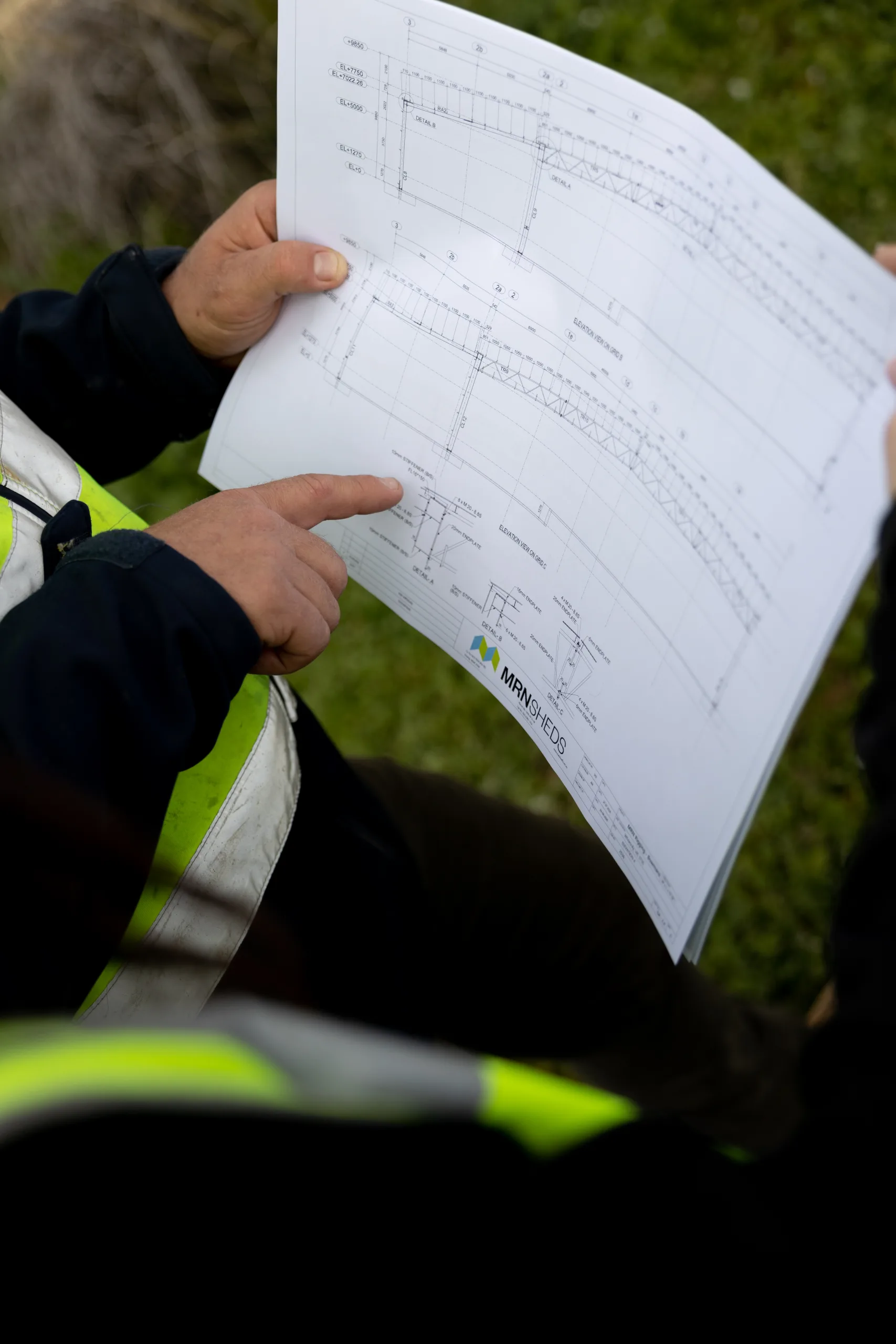
The size of the building, required spans, wind loads, openings and intended use all influence the appropriate structural system.
At MRN, our C-Series, R-Series and S-Series provide different structural solutions for different applications.
Our C-Series cold formed structures are generally suited to smaller agricultural buildings and storage applications.
For larger farm sheds requiring greater spans, larger openings or increased structural capacity, our R-Series RHS structures or S-Series UB and open-web truss structures can provide additional flexibility.
The important thing isn’t simply choosing the heaviest structure.
It’s choosing the structure that’s properly engineered for the job.

Why work with a local farm shed builder?
For farmers in Albury-Wodonga, Southern NSW and North East Victoria, working with a local builder can make the process significantly easier.
A local team understands the region, local conditions and the practical requirements of rural construction.
At MRN, we manage farm shed projects from the early planning and design stages through engineering, approvals, construction and handover.
We work with experienced local trades and use Australian-made BlueScope steel, providing a quality structural solution designed around the requirements of your farm.
Whether you need a simple machinery shed, a large clear-span farm building or a combination of storage and workshop space, the starting point is the same:
Understand how you need the building to work.
Then design the shed around it.
Ready to get a quote you can actually compare?
We scope every project in full permits, engineering, trades, and all. No surprises, no hidden add-ons. Tell us what you’re building and we’ll put together a complete picture.

-
- Shed Design & Planning
Cold form vs structural steel, which shed is right for your project? -
- Shed Design & Planning
Why the cheapest builder quote almost always costs more in the long run -
- Shed Design & Planning
The five questions to ask any builder before you sign a contract

No related posts.
The brief, delivered to your inbox
New articles on shed planning, construction, permits, and project management no spam, unsubscribe any time.
"*" indicates required fields